


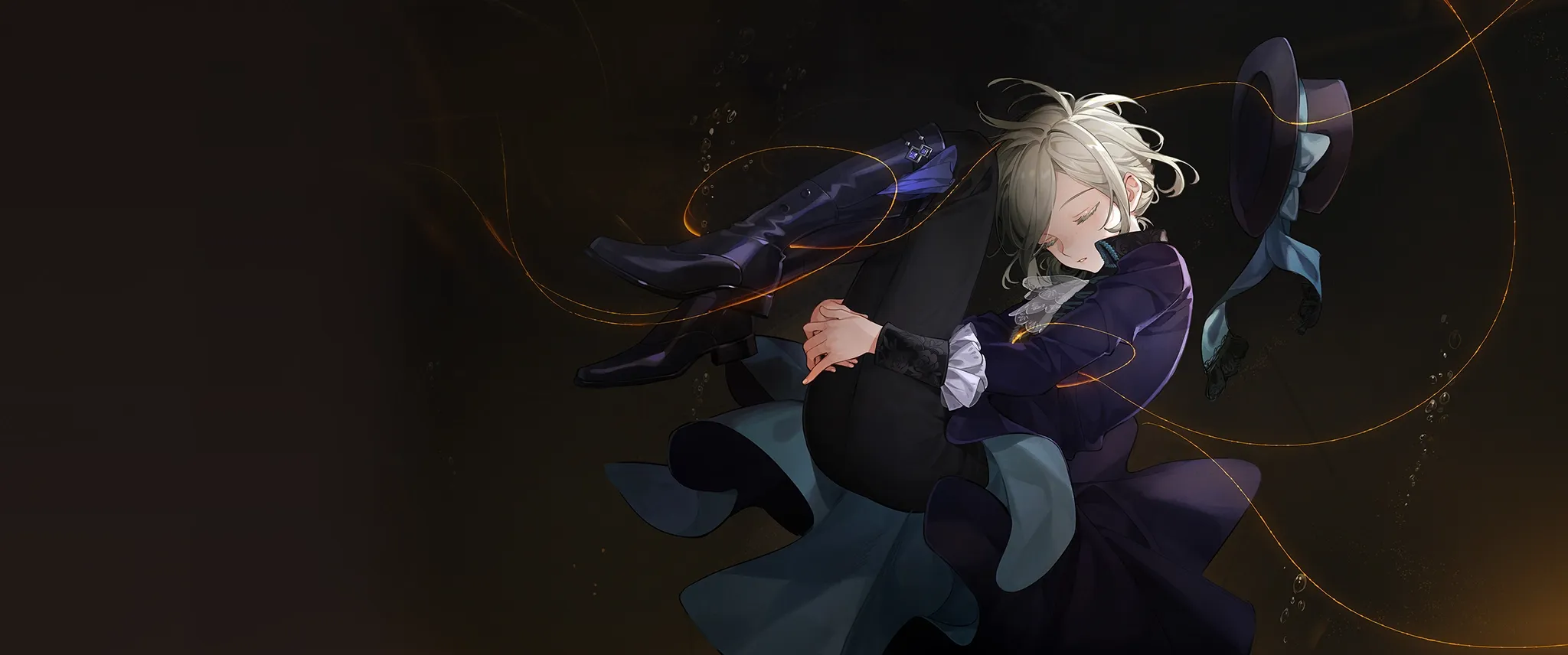
1990, Guadalajara, International Book Fair.
People move between bookshelves and corridors, engaged in heated conversations. The air is filled with the mingling of multiple languages.
Editor: I'm afraid we can't publish your novel in its current state, Recoleta. We look forward to seeing more refined work from you in the future!
Editor: Ah, Mr. Cruz! What a pleasure to see you here! I'm an editor from Naranja Dulce Publishing House. Could you spare a moment to discuss the copyright for The Bluebird? We're huge fans of your children's literature.
The editor leaves, hurrying after another writer, leaving Recoleta standing alone in place. The 17th publisher to reject her today.
Recoleta: Hey, relax, Recoleta! Look at all the books around you. This place is heaven! You can't get down on yourself, not here!
Recoleta: There are so many writers and publishers here. It's only natural you'd be turned down 17 times. This is just the beginning!
The young writer, attempting to forget her 17th rejection, flips through the event guide in her hands.
Recoleta: Now, which section should I visit next? Hmm, oh, this brochure might help.
She turns to the last page of the thick handbook, where all the invited authors and their contact details are listed.
Recoleta: Wonderful! An exchange of ideas between writers—nothing could be more incredible than that!
Recoleta: I recall James Joyce was inspired by a letter he received from Henrik Ibsen. So, maybe what I need is to find someone to share my manuscript with, but who?
Recoleta: Tadeo, Emma Zunz, Aleph, Averroes ...
A knock at the door interrupts her daydream.
Recoleta: Oh, it's you, sir!
Recoleta: Don't worry. I promise I'll catch up on the rent next month! Although I must say, this apartment's hardly worth the price. The cracks on the walls must date back to the last century!
Landlord: Hmph, make all the excuses you want, ingrate. If you don't pay the rent soon, you'll either end up in that crumbling colonial building on the corner or on the street selling oranges at the San Telmo market!
Landlord: By the way, Julia told me you lost your job at that textile factory.
Landlord: You under some kind like "can't work in one place for more than three months" curse or something, little girl?
Recoleta: Oh, you don't even want to know about the terrible things that happened in that factory. All I did was lend the oppressed workers a hand.
Landlord: Bah, you're just like those college kids—full of hot air. Anyway, I'm not here about the rent.
Landlord: Didn't you tell me to watch out for your letters a while back, when you'd just returned from abroad?
Landlord: Well, here it is, a letter for you.
The girl freezes for a moment, then snatches the letter and slams the door shut, almost buzzing with excitement as she unfolds it.
Recoleta: My goodness! Someone actually wrote back to me! This is incredible! Oh, oh, thank you so much for bringing it to me, sir!
She slits open the long-traveling letter.
Recoleta: "Dear Ms. Recoleta ..."
Recoleta: It's from—let's see—Aleph!
Young Woman: Eh, I've been watching you. You're not a local, are you? What are you writing?
Recoleta: Oh, hello! You're right. I just arrived in Buenos Aires three days ago. My trip's been a lot like a Copes tango performance—full of twists and turns, but nothing much worth telling, really.
Recoleta: I'm actually writing a reply to my pen pal! Long story short, I sent him a manuscript of my novel, and to my surprise, he actually wrote back.
Recoleta: Amazing, isn't it?
Recoleta: In our recent letters, we've been discussing how my novel lacks a key character to drive the story toward a decisive ending.
Recoleta: So we've been debating whether to introduce a new ghost to act as a turning point for the story.
Young Woman: Oh, so then you're a writer? Hey, Pancho, come over here! I've found an actual real-life writer!
Young Man: What's the big deal? I wrote plenty of poems in middle school.
Recoleta: Oh, so you're a poet!
Recoleta: I have a feeling we're about to embark on an incredible adventure together! Are you interested in joining the visceral realism movement?
Young Woman: Vis what? I've never heard of it. But it sounds like fun.
Recoleta: Fabulous! We have no time to waste. Once I finish this letter, you two must join me on a journey to Ushuaia!
Young Man: Ushuaia? The end of the world? Why the heck would we go to that icebox?
Young Woman: Oh, don't be such a downer, Pancho. Just think of the fun we'll have, the breathtaking scenery we'll see, and the incredible stories we'll hear.
Young Man: Fine, María. I'll deal with the cold if you really wanna go so badly.
Young Woman: By the way, could you tell us about your novel?
Recoleta: Of course. I'll tell you all about it on the way. Hmm, now where to begin?
Recoleta: Alright, let's start with the cottage with the blue roof in Amalfitano.
Recoleta: It's been six months since we first exchanged letters.
Recoleta: Since then, I've been traveling. First from Chile to Mexico, then from Mexico to Argentina. And I've never stopped writing.
Recoleta: I'm not really sure what the purpose of my novel is. I just keep writing and writing. I can't stop.
Recoleta: What power does literature hold? What responsibilities? Perhaps only by continuing to write will I understand one day.
Recoleta flips through her notebook, every turn of the page containing a different-colored letter.
After their long journey, these pages of letters form a faded riddle, their handwriting long since blurred.
Recoleta: Aleph, you're right. I do want an ending to my novel.
Recoleta: But not like this.
Aleph: You really have no idea, do you, Recoleta?
Her only reader realizes she has still not grasped what is happening, forcing him to reveal a truth he has long concealed.
Aleph: The Rise and Fall of Sanity is your story.
Recoleta: What do you mean?
Aleph: You are a ghost, wandering this forsaken land, still striving to create a miracle.
Aleph: You are a wandering poet born in Amalfitano, the foolishly brave protagonist of the story, and the embodiment of the author herself.
Aleph: A reflection, yes. The author, no. You are simply a figment of her imagination, a manifestation of her dream to wander.
Aleph: Have you not realized it? The literary pursuits and romantic adventures you described ... they are merely faded memories from 1975.
Aleph: The poets who joined the visceral realism movement with "you" left Latin America long ago.
Recoleta: Faded memories?
Aleph: As for the novel, it's yours now—a story you're writing, a story about yourself.
Aleph: Your departure has turned Amalfitano into a ghost town. The characters have lost their connection to you. They're gradually fading away.
Aleph: If the novel is destroyed, you too will cease to exist.
Vertin: Wait, this is ... Ms. Recoleta, is what he said true?
Recoleta: ...
Recoleta: I ... I know you never lie, pen pal.
Recoleta: In your first letter, you told me that a character's role and fate must be determined from the outset and consistently adhered to throughout the story.
Recoleta: Reading the perspective and insights of a walking encyclopedia—having such a person be willing to share their thoughts at all—was an exhilarating experience.
Recoleta: I had never imagined my novel could develop in this way. Words could hardly describe how I felt in that moment.
Recoleta: No one but you has ever understood the story of that town, let alone offered any revisions.
Recoleta: Following your advice, I added the Bank Clerk, the Dune Piscator, the Blind Weaver, and the Murdered Donkey Driver.
Recoleta: Amalfitano was no longer an empty town with a single blue-roofed cottage. The new ghostly residents had begun to fill the skies over it.
Recoleta: The story was finally reaching completion. I could feel that the ending was within reach.
Recoleta: I became increasingly eager to meet my pen pal. I couldn't get the thought out of my mind.
Recoleta: I wasn't sure what I would say to this Aleph. A simple "thank you," perhaps? Or maybe a discussion about the future of Amalfitano with its sole reader?
Recoleta: Or maybe I'm no different from everyone else—led up the garden path by "fate."
Aleph: ...
Recoleta: But even if I am a ghost, as you say, an incarnation of someone else, a fictional being—
Recoleta: So what?
Recoleta: My resolve will not waver, even if my existence is bound to fade away.
Recoleta: Because this isn't what literature is supposed to be.
Recoleta: You once told me there isn't an ounce of reality in fiction—only voids and glorified lies.
Recoleta: Let me tell you this: whether real or fictional, corporeal or intangible, I have accepted my existence.
Recoleta: Now, let's put a stop to this, Aleph.
Recoleta: The inmates aren't characters in my novel. They're people trapped in a prison, just as you are.
Recoleta: By simulating my story here, you have made me into some kind of god, a guilty false creator, a dictator of fate.
Recoleta: I never wanted any of this!
COMBAT
Shattered words and ghostly illusions roar forth, breaking free from the story's structure and the gaps between its lines, filled with regret and obsession.
Torn letters and book pages flutter in the air, like snow in a crystal globe on a winter night.
Everything is quiet.
Sonetto: Ms. Recoleta has vanished.
Sonetto: Did she really "cease to exist" like Aleph said?
Vertin: Recoleta ...