

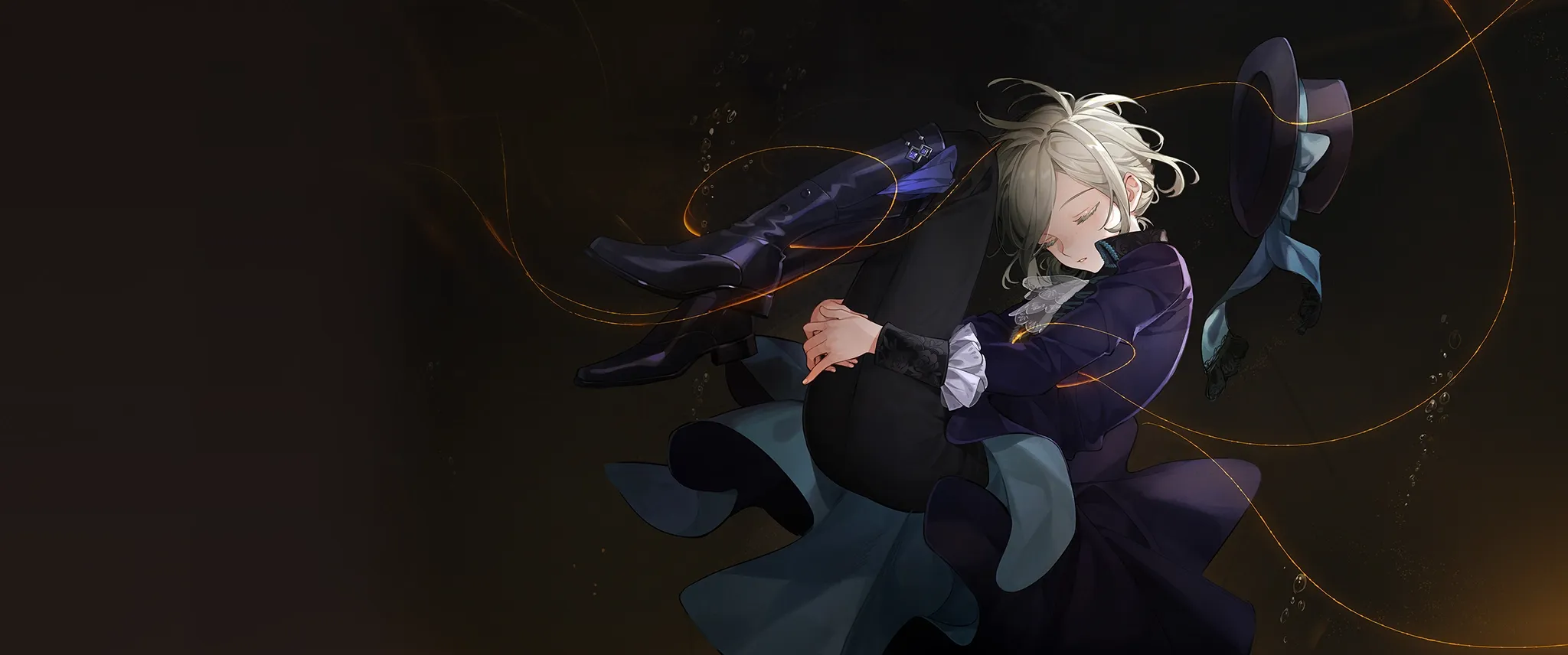
Paul: Here you are, Eberhard.
Eberhard: Paul, it's good to see you, my friend. How's everyone holding up on the front?
Paul: They are celebrating this war's end, singing songs and drinking beer. It's peaceful.
Eberhard: Hm. Peaceful.
He repeats the words with satisfaction. Eberhard's spirit has changed significantly from the last time they met.
Paul: It's unexpected that the Foundation would allow you to move so freely.
Eberhard: Heh. No, my duty is done. I have no place in Montpaix—no place among suits and politics.
He exhales, stretching in the crisp morning air.
Eberhard: That red-haired official agreed to let me go for a walk every once in a while. He said, "Someone will keep an eye on you." Hah, whatever.
Eberhard: It's getting cold, but I enjoy a crisp winter morning like this. It reminds me of our days as students.
Eberhard: Remember? We had to get up before dawn. I was lazier than you. I wouldn't wake up until you rode your bicycle to my window and shouted my name.
Paul: Then, the two of us would miss Latin class. Just as Walter did.
Eberhard: Hahaha, I don't blame him. Latin class was hell.
Eberhard: Walter. He was a good lad.
Paul removes a crumpled envelope from inside his jacket.
Paul: This parcel is to be delivered to you. There's a letter within it from Mr. Mühlenberge, addressed to those of us in Class 3.
Eberhard: Mr. Mühlenberge ... I was planning to visit him during my home leave, but, well, you know what happened back home.
Eberhard: But he doesn't have a clue about what happened out here. What use is this letter? You and I are the only two class members left since the fall of Montpaix.
Eberhard: sigh Alright, let's hear it, Paul.
Steadying his breath, Paul tears it open.
He unfolds the letter.
Paul: "My dear students and honorable soldiers! The war has reached a critical point, and, as your teacher, it is my duty to boost your morale."
Paul: "I am aware that the vision of the war from the front lines may be more limited than for those of us in the fatherland. So, allow me to make things clear: victory is within our grasp."
Paul: "Though I'm certain life on the front is tough, remember, this is a sacrifice for a greater cause. Therefore, let your suffering be sweet!"
Paul: ...
Paul: "... This will be the most glorious moment of your lives. And, as I have taught you, perhaps it will please us one day to remember these things."
Eberhard: "Please us"? Ha. Listen to him. He's even quoted Lucan's poem, or was it Virgil?
Paul: It is most likely Virgil. He has quoted him below, "Fortune favors the bold."
Eberhard: The quote about remembering things, how do you say it in Latin again? Forsan ... haec ... and then what? Hmm ...
Paul: The "et" is missing, Eberhard.
Paul: "And perhaps it will please us one day to remember these things."
Eberhard: Yes, that's it! Hah. That old fart ... He cheated. These aren't even his words.
Eberhard: What a fool. He doesn't know what he's talking about.
Paul: Heh ...
After a bitter laugh, both are silent for a moment.
Eberhard: Paul, I'll never be "pleased" looking back on any of this.
Eberhard: If I have children one day, how will I tell them about all this?
Eberhard: I sent our fellow countrymen directly into the line of fire—a death trap—knowing full well that the enemy would retake the ground in mere hours.
Eberhard: Young lives, lost one after another, and for what? Some senseless orders?
Eberhard: I've heard enough. Put the letter away.
Paul slowly folds up the letter. Eberhard, however, snatches up the letterhead, crumples it into a ball, and throws it into the weeds beside the monument.
There is no more fighting, and for the first time in a long time, the day passes without the thunder of artillery.
The sunlight falls on blades of grass, tombstones, and birds in the air. Their songs finally can be heard once more.
Eberhard: This feeling ... I've never felt it before. It's as though, for this one moment, I can—no, I have already taken control of my future.
Eberhard: Haheh. I'd forgotten how good it feels to be alive. Heh. For the first time in a very long while, my heart feels light, my friend.
Eberhard: The choices I've made may be irreversible, but I've made up my mind. There is only one path for me now.
He looks to the top of the hill and starts climbing.
Paul: Do you not wish to continue your studies? Your writings are surely safely stored in the school's archives.
Eberhard: Would you return to school, Paul?
Paul: It is unlikely, but you still may.
Eberhard: For what? For knowledge? A diploma? That might've mattered to the old me.
Eberhard: But I'm no longer that boy.
Paul: Eberhard—
Eberhard: It's too late, my friend. Far too late.
Eberhard: I need some time alone. Please write the reply to Mr. Mühlenberge for both of us.
The weather is unseasonably mild, and Eberhard begins to climb the hill like a student on a field trip.
The sunshine and brisk air make the world feel new.
Eberhard: The war is over, Paul. The sky is so blue.
Paul: Just as it always was.
Eberhard: Just as it always was, hmm. Well said. Farewell, my friend!
He waves, turns, and walks away.
Paul stands and opens his notebook.
Paul: "Dear Mr. Mühlenberge, your letter has been well received by your students."
Paul: "They have endured the darkest and hardest of times together. But now, the sorrow and pain have reached their end."
Paul: "They showed courage and loyalty, yet these virtues became a burden—one far too heavy for their young shoulders to bear."
Paul: "Therefore, I will not pile any more empty words upon them."
Paul: "War has shaped these young men into something else entirely. The knowledge you imparted is of no use to them now, nor will they ever again hear your teachings."
Paul: "At this time, I must inform you with the heaviest of hearts that ..."
Paul: ...
Paul: "All of your students from Class 3 have fallen."
Paul: "With best regards. A dead man."
This concludes the records of the soldier Paul Haumann.