
1987, Plesetsk Cosmodrome
17 hours before the "Storm"
The little soon-to-be astronaut stands before the heavy blast door and presses her finger against the scanner.
Just like several months before, she walks the quiet corridor on the way to her training.
Kiperina: Do everything we can, and do my best.
Kiperina: Leave no regrets.
Kiperina: That's why I have to finish my training.
The closer she gets to the end, the more the nerves take hold.
So, she looks for comfort in steady, familiar routines.
One, two, three.
She finishes her count silently. Right on cue, the blast doors slide open.
COMBAT
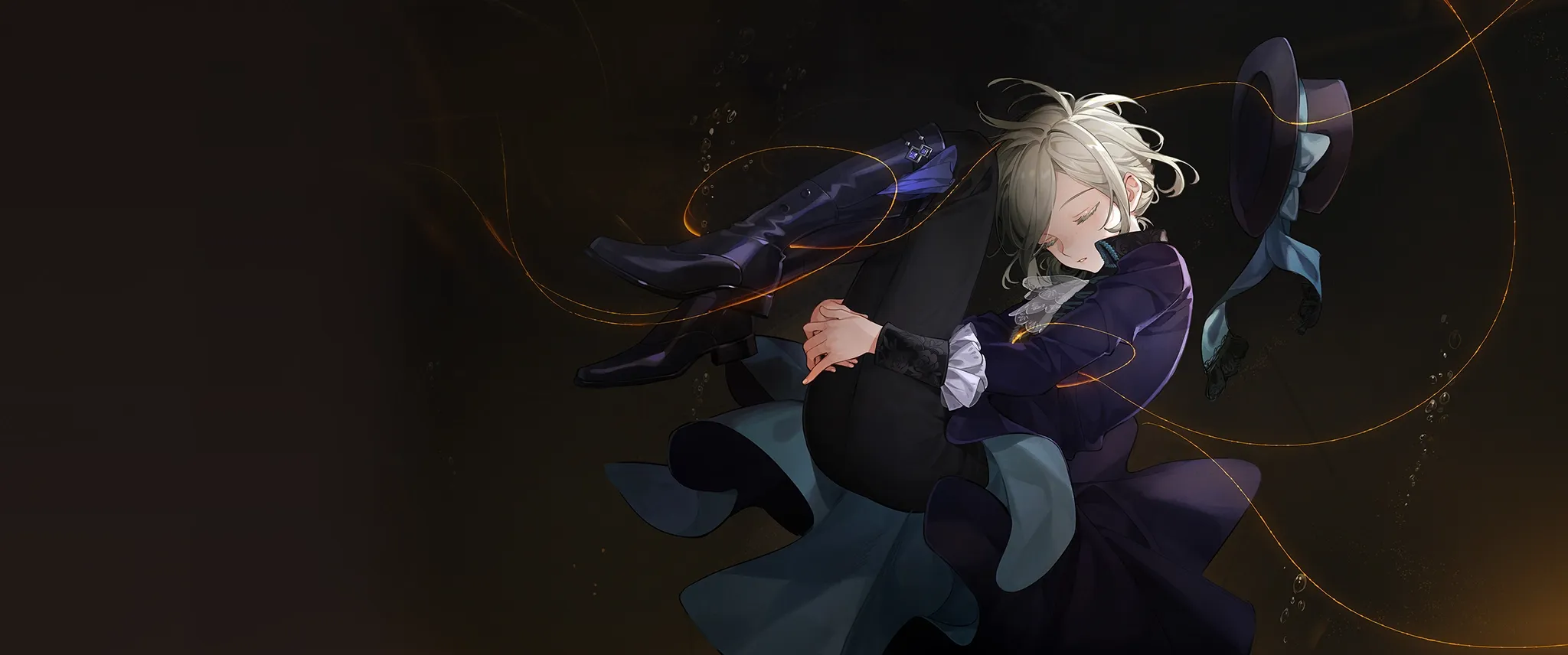
The weightlessness calms her. Compared to the other simulated operations, arcane skill practice, and centrifuge spins, this is her favorite routine.
It's like walking a tightrope, but without the fear of falling.
With gravity out of the picture, the sky itself feels reachable, the world stretching out like a velvet blanket around her.
If this is the last day of my life,
how can I prove that I was here in this world? With my name, my memories?
I remember what they called me:
Alina Medvedeva. The girl like a bear.
You must have a proper stage name for your performance.
Mr. Kozlov: "Kiperina."
Mr. Kozlov: What do you think? Natalya and I decided on it together. She's a clever one, always reading the latest astrological lectures.
Mr. Kozlov: It's from a place in the stars. Kuiper, she calls it, some asteroid belt made of ice.
Mr. Kozlov: This is because, to us, you are a gift from the stars!
He lifts her high, steady and secure. To a child, it feels like flying.
So close to a starry sky built from light bulbs and canvas.
Mr. Kozlov ... Mrs. Kozlov ...
Natalya Kozlov: We're leaving tonight? Why all the rush? Let's wait one day later, or maybe two. Why don't we ask that Laplace lady to see Alia again?
Mr. Kozlov: I am sure she is too busy. But look, everyone's leaving town! Something must be happening.
He gestures to a place out in the distance, the dimly lit Cosmodrome barely visible against the night sky.
Mr. Kozlov: She'll be safe there. Didn't you hear them say that? Laplace's building will be the last to fall, even if the whole world comes to an end.
Mr. Kozlov: What we must do then is keep ourselves safe. That way, some day in the future, we will have the chance to see her again, sitting in the audience, clapping for us, until her hands are red.
Natalya Kozlov: My big bear wants to pretend he doesn't have a heart. I know you miss her as much as I do.
Mr. Kozlov: Of course, but I must stay in control of myself. Maybe we can put something on the signboard—a circle, like her space helmet.
Mr. Kozlov: You know that signboard hasn't been changed since my grandfather was the ringmaster. What a change it will be!
Natalya frowns as she struggles with the knots on their luggage, but straightens up when she hears the comment.
Natalya Kozlov: Yes, yes, and we will add some stars and spaceships. I'll paint them on once we're set up in Moscow. Oh, and don't forget to take down their address so we can send things to her.
Mr. Kozlov: You think I didn't do that the minute we came here? Natalya, you're showing so much concern. What happened to my carefree circus wife?
Natalya Kozlov: It's just that there is nothing else I can do.
She pats the package beside her—a few neatly wrapped dolls and a set of freshly cleaned costumes.
Natalya Kozlov: We've always been there for her. Now she's alone and far from us, who will care for her now?
Mr. Kozlov: sigh It is how it must be. We cannot be there for her forever.
Mr. Kozlov: You can't do this your whole life.
Mr. Kozlov: Audiences come to watch an acrobat fly, but they also come to see if they will fall.
Mr. Kozlov: Most people would never dare to walk on a tightrope.
Mr. Kozlov: They pay to see people do the thrilling things that they would never do themselves.
Mr. Kozlov: But it is a dangerous business. I often wish that you will one day find a safer way to live than this.
Is walking on the ground really any safer?
How long will my life be?
Eight years, ten years, 15 years? What's next? When will it end?
Hissabeth: Time never ends. It's a concept, and there are many explanations for it.
Hissabeth: One suggests that since the whole world is made of particles, including our brains, then our minds too can be calculated, so that everything that's happening or about to happen can be predicted.
Hissabeth: Past, present, future. All that ever was, and is, and ever will be, was destined from the moment the universe began. Each moment like a knot on a string that's already been tied.
Hissabeth: Our lives just moving along a fixed track from birth to death.
Hissabeth: Then there is another, the theory that none of this is really happening at all, that all perception is illusion. Only the present exists, and only for as long as we're experiencing it.
Hissabeth: If you asked me to choose, I prefer the first one.
Kiperina: It's not like a tightrope then. When I walk on the rope, I don't see past and future. I only feel what is happening right now.
Kiperina: For example, these lights make my palms feel hot and warm. But the stones beneath me are cold.
Hissabeth: Cool, sounds like you favor the second theory.
Hissabeth: But it doesn't matter which side you're on. There's one thing both have in common.
Hissabeth: Our existence—whatever you make of it—is just a fleeting moment in time.
Kiperina: But those countless moments string together into eternity.
Kiperina: I'm small to the universe, just a person, but I'm a part of Utrennyaya, which is bigger than myself. We belong to a people, a country, a planet, and a galaxy.
Kiperina: Maybe that's how we share in eternity, by existing as part of it. Each one of us, no matter how small, takes part in creating the universe.
The researcher widens her eyes in brief surprise but just as soon returns to her usual confident and breezy smile.
Hissabeth: You got it.
Hissabeth: When we learn all the rules that govern our universe, we'll be able to predict all that is to come. We'll be able to survive without superstition and fear of the unknown.
Survive. That's easier said than done.
If we fail tomorrow ...
The "Storm" will wash away all that we've done here, everything I've ever known.
The only trace of it will be that recording, stuffed away in some dusty cabinet in the Foundation.
Even so, I hope one day, when they mention me, they will look up at the sky and say:
"A brave young astronaut walked among the stars."
It's not about Mr. Kozlov's wishes for Alia, nor about her friends' expectations for Kiperina.
And she, Alina Medvedeva, made the choice to go herself.
Natalya returns to the tent to retrieve the last few boxes of clothes, while Mr. Kozlov is busy tightening the ropes on the luggage.
There's a lot to pack. He tugs hard at the rope, tying the dolls Kiperina left behind safely onto a bundle, muttering the rest of what he didn't get to say earlier.
Mr. Kozlov: Children grow up, adults grow old, and then we die, so what's the use in worrying? All that matters is our Alia will be safe.
Pointer: Mr. Kozlov? You should have already left. The longer you wait to leave, the more dangerous it will be.
The man is startled. He's not good at dealing with researchers, and he never expected to run into one on the empty streets so late at night.
Mr. Kozlov: Is-Is there something wrong then? We are ready to go, as-as you can see. We're all packed up.
He motions to the stacked boxes behind him, his tone on the brink of pleading.
Pointer: No. Nothing to be concerned with for now. But we need you to follow the evacuation notice for your safety. Keep your passes with you. You may need to show the soldiers on the road ahead. And please take care. The snowfall is getting heavier.
Mr. Kozlov: Sure, sure. But if you don't mind my asking ...
Mr. Kozlov: Is Alia alright? How is she? How's her training? Sorry, it's just ... I know that she's a good girl, but I'm afraid she'll push herself too much. She's always been so diligent.
Pointer: You have nothing to worry about. Kiperina is a very disciplined and intelligent young woman. We've been most impressed with her work.
Pointer: I believe that she could have a very promising future with Laplace.
The fatigue on his face eases a bit, and some pride returns to him—the pride of a ringmaster.
Mr. Kozlov: Promising! I knew it. My Alia is a promising candidate for Laplace!
Mr. Kozlov: sigh When we first found her in Murmansk, she was just an orphaned babe. And now, see how wonderful she has become.
Pointer: I believe I understand. Time really does fly, doesn't it?
Mr. Kozlov: Thank you for telling me about her. I've wanted to pay her a visit, but I don't want to bother her, and I also don't think she wants to see an old man cry.
Mr. Kozlov: But if you say she is doing well, this is enough for me. But I must ask, miss. Why are you still in town? Aren't you going to be busy with the launch soon?
Pointer follows his eyes as he casts a look down the street. Bright fluorescent lights illuminate snow that swirls as it falls.
The snow falls on both of their shoulders. It melts on Mr. Kozlov, but it settles in layers on Pointer's metallic frame.
Pointer: I'm here to see if we missed anything.