
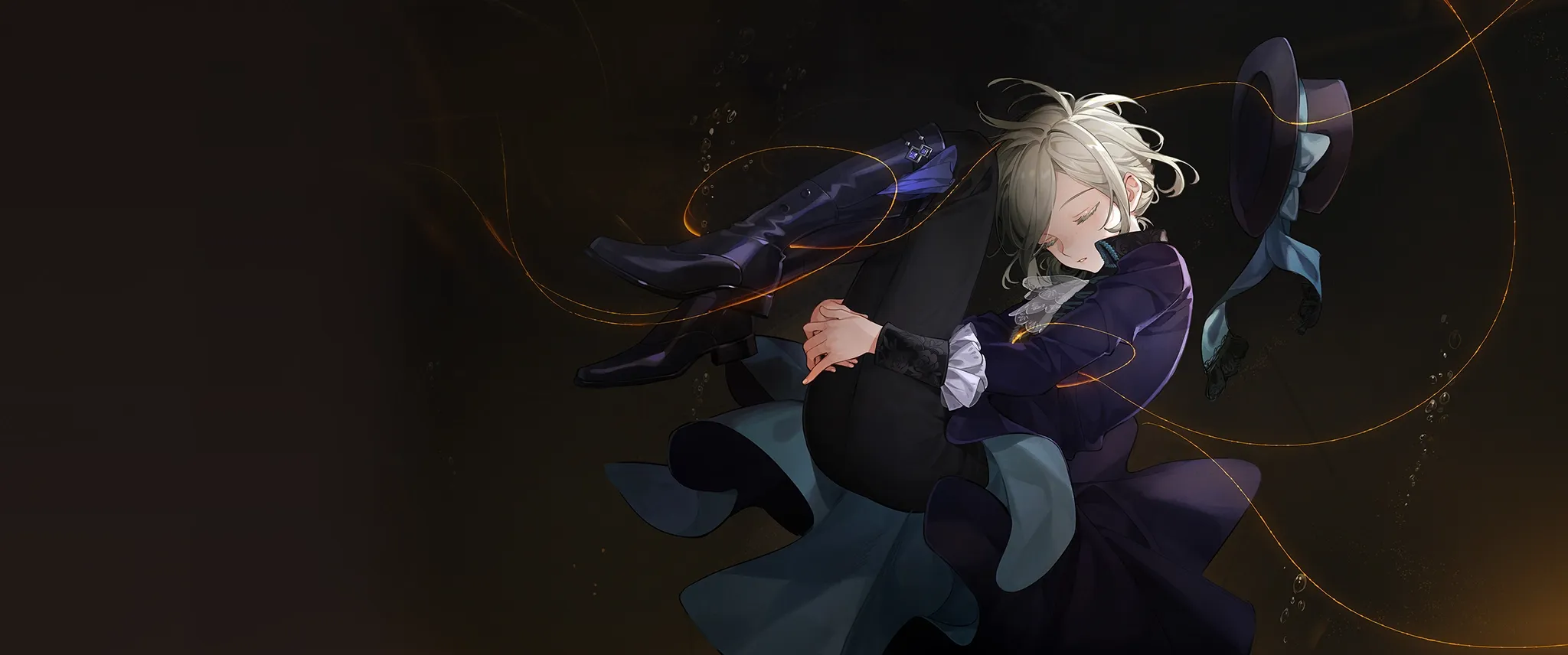
The stillness of the girl sitting in front of her contrasts with the rush of her arrival.
The lake lies quiet, holding a long, wordless note.
Fatutu: Miss Barcarola.
She pauses.
Her shell necklace hangs low. Her fingers run over its ridges again and again, finding deep and familiar grooves.
Fatutu: I remember you once said that you made the decision to leave your home all by yourself.
The ocean breeze swept across the deck that night as three girls shared secrets. Some kept theirs close; others let them drift.
Fatutu: What did that feel like?
Faced with the calm and direct question, Barcarola allows herself to slip into memory.
She remembers when she chose to leave, standing in the plaza of Cremona, looking out toward the river, picturing the open sea beyond.
A white dove took flight, skimming past rooftops. By the time it flapped again, she felt she was already aboard.
Wind in her hair, heart soaring.
She had never imagined someone would ask her this. Perhaps to everyone else, the answer seemed obvious: a daring musician who sailed the waves should be fearless.
But her friend is from a world so different from her own. The answer she gives now must feel just as strange.
She hesitates. The moment hangs like the seconds before a symphony.
Barcarola: It was what I wanted. I felt ... happy.
Barcarola: In Cremona, all anyone could ever talk about and play was the violin. I didn't want to hear just one instrument my whole life.
Barcarola: I wanted to go everywhere, to find every instrument in the world, to hear them, to play them.
Barcarola: That was my dream, and it still is.
Barcarola: I think "home" means something different to everyone.
Barcarola: Cremona means something else to me now than it did then.
Barcarola: I do miss it sometimes.
Barcarola: You could say it was only after leaving Cremona that I came to miss it at all.
Fatutu slinks her head into her shoulders.
Her shells are clinking between her fingers.
Fatutu: You're right.
Fatutu: We lived on our island, knowing nothing of the world beyond.
Fatutu: And because of that, we never wondered what the outside was like. We were content with what was in front of us.
Fatutu: The Nukutai don't stay away from home for long. We only ever set one course.
Fatutu: Maybe ... maybe it does mean something different. For us, it was the thing we were most afraid of losing, afraid of drifting away from it—never to see it again.
Barcarola: Tutu?
Fatutu: When we went out to sea, when we fished or planted, we only ever dealt with our own kin.
Fatutu: We never trusted the merchants we traded with. They were always outsiders to us.
Fatutu: Then, when the island sank, we felt we had to trust, but we trusted the wrong people, and we lost our way.
Fatutu: I started doubting things the moment I stepped on that ship.
Barcarola: I remember. You were already starting to think maybe the outside world wasn't as scary as they said?
She nods almost imperceptibly.
Fatutu: I saw how the crew would cry out to one another, their faces so full of joy, like how Nukutai smile after the trade season.
Fatutu: I saw that girl—the other musical girl from the suitcase. She had her own ship. She stood there so proud, so striking.
Fatutu: And then I saw you, Barcarola.
Fatutu: People boarded the "Free Breeze" from all over the world, and they'd all stop to listen to your music.
Her words ring with so much sincerity that the musician can't quite bring herself to face her friend.
Fatutu looks out over the lake, in a stare that feels calm but tangled, like a knotted rope that's come loose, only to twist again.
Fatutu: Then I thought, if this world is really so full of hate and despair, why is everyone here so happy?
Fatutu: And if we were wrong, and the world wasn't cruel, why did it swallow our island whole?
Barcarola: I don't think it was anyone's fault. We just lived through a storm the likes of which no one's ever seen.
A storm that dragged nearly everyone into the depths, without mercy.
Barcarola: When I first left, all I really wanted was to see what instruments people in other lands played and what kind of music they made.
Barcarola: But before I could even find those instruments, I saw the passengers instead. And I saw that they were happy.
Barcarola: I also noticed that so often their first requests were to ask me to play something from their homeland.
Barcarola: Sometimes it brought them comfort; sometimes it didn't.
She remembers those passengers, caught in moments of joy, followed by long, aching silences.
Barcarola: I realized then that there is no one in the world who is truly happy all the time. We all carry a little regret and a little sadness inside of us.
Fatutu: You're right.
Fatutu: That's something you only understand once you've set sail beyond your own shores.
Fatutu: Even so, knowing all this ...
Fatutu: We paid too high a price.
She lifts her shell necklace. Each piece a different shape, worn smooth by time.
Fatutu: In Nukutaeao, when you trust someone, you carefully pick out a shell, polish it with care, and add it to their necklace.
Fatutu: You can tell who is the most loved by who has the longest necklace.
Fatutu: It would trail to their ankles, then wrap around their neck—once, twice, three times over.
She has one of those long shell necklaces, a symbol of the trust from the Nukutai.
Fatutu: I always dreamed of having the longest necklace.
Fatutu: And we'd always ... always be in Nukutaeao, with my brother, Toa, and Selone.
Fatutu: We'd always be there together.
She holds her head steady, as if trying to keep her gaze from falling into the deep water ahead.
Until at last she can't carry the weight anymore. She folds at the waist, falling like a wilting leaf.
She buries her face in her hands and trembles.
Tears stream out through her fingers, falling one by one into the lake.
It becomes a deep and sorrowful sob.
Fatutu: I always feared what my brother told me, that if we stayed away from home too long, the shells would crack and never be whole again.
Fatutu: He's gone now. Toa's gone. We left Nukutaeao. And these shells ... they're still whole.
Fatutu: Kamuta ... brother ... I ... I wish more than anything that what you said was true.
Fatutu: I really, really do wish it were.